Proprietary Blends Explained: What They Hide And Why It Matters
By the SugarReset Wellness Desk · · 8 min read
A proprietary blend lets a manufacturer list what is in a formula without disclosing how much of each ingredient it contains — only the total weight of the blend.
It is legal and extremely common. It also removes the single most important piece of information you need to judge whether a formula can do what it claims.
What a proprietary blend actually is
Open any supplement label and you will see two kinds of entry. Some ingredients are listed individually with their own weight: ‘Chromium Picolinate 200 mcg’. Others are grouped under a heading such as ‘Proprietary Blend 200 mg’ with the ingredients listed underneath but no individual amounts.
US labelling rules permit this. The manufacturer must declare the total weight of the blend and list its ingredients in descending order by weight, but they are not required to say how much of each is present.
The stated reason and the real one
The stated justification is trade secrecy: if a company discloses exact ratios, competitors can copy the formula.
That argument has some merit for a genuinely novel combination. It has much less merit when the blend contains twenty well-known botanicals that every competitor already uses. In practice, proprietary blends also make it impossible for a buyer to see when an expensive headline ingredient is present in a token amount — a practice sometimes called fairy dusting.
Both motivations exist in the industry. The point is not that every blend is hiding something, but that you cannot tell which is which, and that asymmetry is the problem.
How to do the arithmetic yourself
You can extract useful information from a blend with two pieces of the label.
Step one: divide. Take the total blend weight and divide by the number of ingredients. A 200 mg blend across 22 ingredients averages roughly 9 mg each. That is your ceiling for the average ingredient, and immediately tells you nothing in that blend is present at a research-level dose for most botanicals.
Step two: read the order. Ingredients must be listed in descending order by weight. So the first two or three are getting a disproportionate share and the last several are getting very little. If a marketing headline ingredient appears near the bottom of the list, that tells you something.
Step three: compare against research. Look up the dose used in studies for the ingredient you care about. If studies used 400 mg and the entire blend is 200 mg, the arithmetic answers your question.
Blend versus single-ingredient: the real trade-off
Broad blends are not automatically worse. They cover more metabolic ground, and for someone who wants general nutritional support across several pathways in one daily serving, that breadth has genuine value.
Single-ingredient products are the opposite trade: one thing, at a dose you can verify against the literature, with nothing else in the bottle.
Which is right depends entirely on what you want. If you have read the research on one specific botanical and want that botanical at that dose, buy it on its own. If you want wide coverage in a convenient format and understand that no single ingredient is present at a research dose, a blend is a reasonable choice made with open eyes.
Applying this to SugarReset
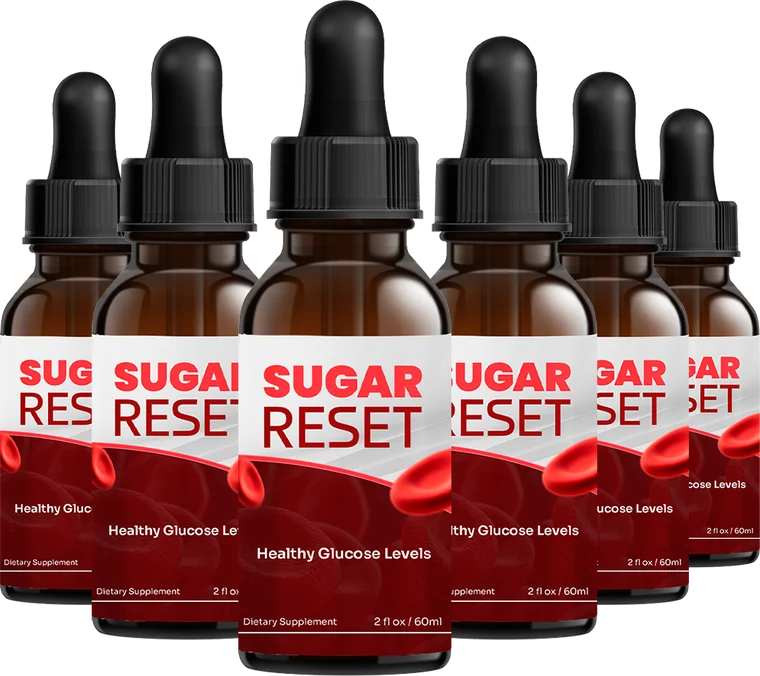
We apply the same reading to the product this site covers, because it would be dishonest not to. SugarReset declares 23 ingredients: chromium picolinate with its own weight, and a 200 mg proprietary blend containing the other 22.
By the arithmetic above, those 22 average roughly 9 mg each — well below research doses for gymnema, green tea and most of the botanicals in the list. The chromium, being declared separately, is the one figure you can verify directly.
That is the honest picture. It does not make the formula useless; broad-spectrum nutritional support is a legitimate thing to want. It does mean expectations should be set at ‘nutritional support alongside diet and activity’ rather than anything stronger. Our full assessment covers this in more depth.
Five questions to ask about any blend
1. What is the total blend weight, and how many ingredients share it?
2. Where in the descending-order list does the ingredient I care about appear?
3. What dose does research on that ingredient actually use?
4. Is anything declared separately — and if so, why that one?
5. Does the marketing language match what the arithmetic allows?
If a product survives all five questions, it is being straight with you. Most of the category does not survive question five.